

Intermittent fasting can be a game-changer for weight loss, improved energy, and better overall health. But like any lifestyle change, it comes with its own learning curve. If you’re starting your 1-month intermittent fasting journey, avoiding these common pitfalls can make the difference between failure and lasting success.
In this article, we’ll explore the top 10 intermittent fasting mistakes people make and how to sidestep them with smart, sustainable choices.
Let See Intermittent Fasting Mistakes
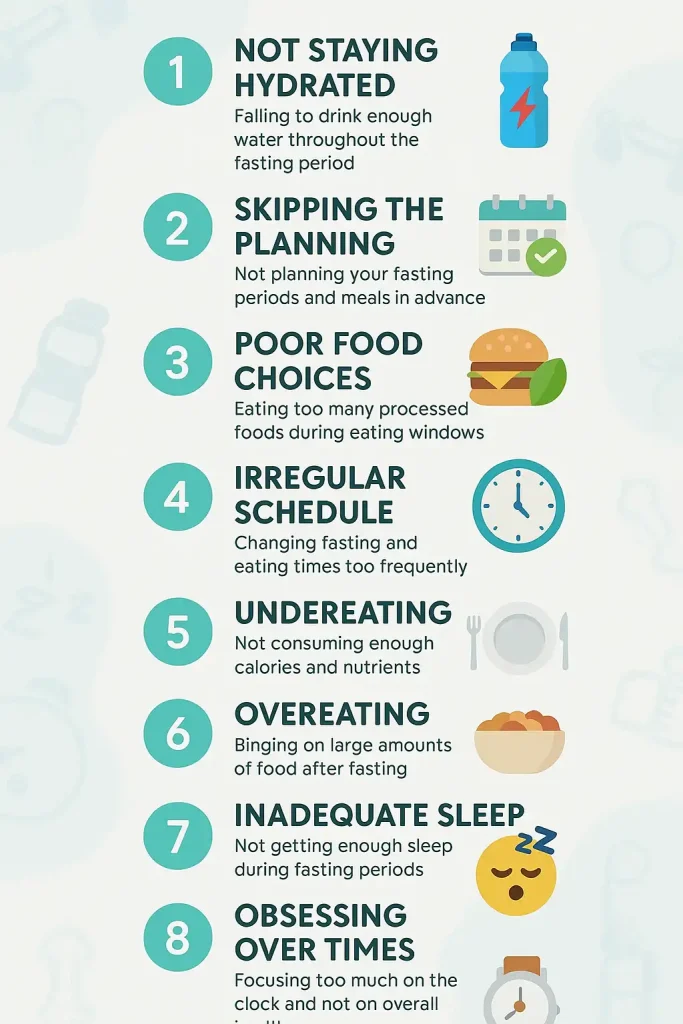
1. Skipping Meals Without a Plan
One of the biggest intermittent fasting mistakes is diving in without a strategy. People often think they can just skip breakfast or dinner and see results. But that’s not how your body works.
What to do instead:
- Choose a fasting window that suits your lifestyle (e.g., 16:8, 18:6).
- Plan your meals in advance to avoid impulsive eating.
- Keep healthy, nutrient-dense options ready.
🔑 Fasting without a plan is like going on a road trip without a map.
2. Overeating During Eating Windows
Many beginners wrongly assume that if they fast, they can eat whatever they want during their feeding window. But calorie quality and quantity still matter.
Common overeating triggers:
- Feeling “rewarded” after fasting
- High-carb, high-sugar binge sessions
- Eating too fast
Tips to fix this:
- Practice mindful eating: chew slowly, and stop when 80% full.
- Balance meals with protein, fiber, and healthy fats.
- Avoid ultra-processed foods.
3. Neglecting Hydration
Water plays a major role in hunger control, metabolism, and detox. During fasting periods, dehydration can easily be mistaken for hunger.
Stay hydrated with:
- Water (add lemon or cucumber for flavor)
- Herbal teas
- Black coffee (in moderation)
⚠️ Avoid sugary drinks and sodas — they break your fast and spike insulin.
4. Not Getting Enough Sleep
Sleep and fasting go hand in hand. Poor sleep increases cortisol, which can lead to cravings and weight gain — sabotaging your 1-month goal.
Sleep tips for fasters:
- Maintain a consistent sleep schedule.
- Avoid blue light 1 hour before bed.
- Don’t eat too close to bedtime — it disrupts deep sleep.
🛌 Aim for 7–9 hours of quality sleep to support your metabolic reset.
5. Expecting Instant Results
Intermittent fasting is not a magic trick. Many give up too soon because they don’t see dramatic weight loss in the first week.
Here’s a rough timeline of what to expect:
| Week | What Happens |
|---|---|
| 1 | Hunger pangs, mood shifts, fatigue |
| 2 | Improved energy, reduced cravings |
| 3 | Noticeable fat loss begins |
| 4 | Body adapts, sustainable results |
🧠 Be patient — your body is learning a new rhythm.
6. Not Tracking Your Progress
If you’re not tracking, you’re guessing. And guessing leads to confusion and frustration.
What to track:
- Weight (weekly)
- Body measurements
- Energy levels
- Sleep quality
- Mood or cravings
Use a journal or fitness app to spot trends and stay motivated throughout the month.
7. Fasting Too Aggressively Too Soon
Jumping into a 24-hour or OMAD (One Meal A Day) fast without building up can lead to burnout and nutrient deficiencies.
Build gradually:
- Week 1: Start with 12:12 or 14:10
- Week 2–3: Try 16:8
- Week 4: Explore 18:6 if comfortable
🧩 Think of fasting as a skill — you get better over time.
8. Ignoring Nutrient Quality In intermittent fasting mistakes
Intermittent fasting works best when paired with nutrient-dense meals. Eating junk food during your window can ruin your results.
Build your plate with:
- Lean proteins (chicken, tofu, eggs)
- Healthy fats (avocado, olive oil, nuts)
- Complex carbs (quinoa, sweet potatoes)
- Fiber-rich veggies (broccoli, spinach)
🍽️ Remember: Fasting isn’t a free pass to eat poorly.
9. Using Fasting as a Way to Punish Yourself
Many people use fasting to “make up” for bad eating days. This can create an unhealthy relationship with food and lead to cycles of guilt and bingeing.
Instead:
- View fasting as a tool for health, not punishment.
- Be kind to yourself on days you slip up.
- Refocus the next day — consistency matters more than perfection.
💬 A balanced mindset leads to long-term success.
10. Not Having a Backup Plan for Social Situations
Social events, family dinners, or festivals can easily throw off your fasting schedule if you’re not prepared.
Solutions:
- Shift your eating window for the day.
- Practice Time-Restricted Flexibility — it’s okay to adapt occasionally.
- Focus on portion control rather than strict timing.
🎉 Life happens — don’t let one event derail your progress.
Final Thoughts: Success Is in the Details Intermittent fasting mistakes
By avoiding these 10 common intermittent fasting mistakes, you’ll give yourself the best chance at achieving real results during your 1-month fasting journey. Remember, intermittent fasting is a lifestyle — not a quick fix. Stay consistent, listen to your body, and adjust when needed.
✅ Ready to See Real Results?
Start strong with our complete 1 Month Intermittent Fasting Weight Loss Plan — packed with daily schedules, meal ideas, and motivation to help you transform your body and mindset in just 30 days!
Liked this post?
Share it with a friend who’s starting intermittent fasting, and let’s build a stronger, healthier community together! 💪
About the Author
WarriorWorkoutFitness is your trusted online hub for free health and fitness advice. Backed by scientific research and expert insights, our content empowers you to make informed lifestyle choices—whether you’re following an Indian vegetarian weight loss diet, tracking progress with a Free Diet Calorie Calculator, or exploring the Ultimate Guide to Weight Loss Diets. We simplify wellness with practical tips tailored to real-life challenges, especially for individuals in Delhi and across India. Join the Warrior community and start your transformation today.
Follow Us : Facebook, Instagram
About The Author