Introduction
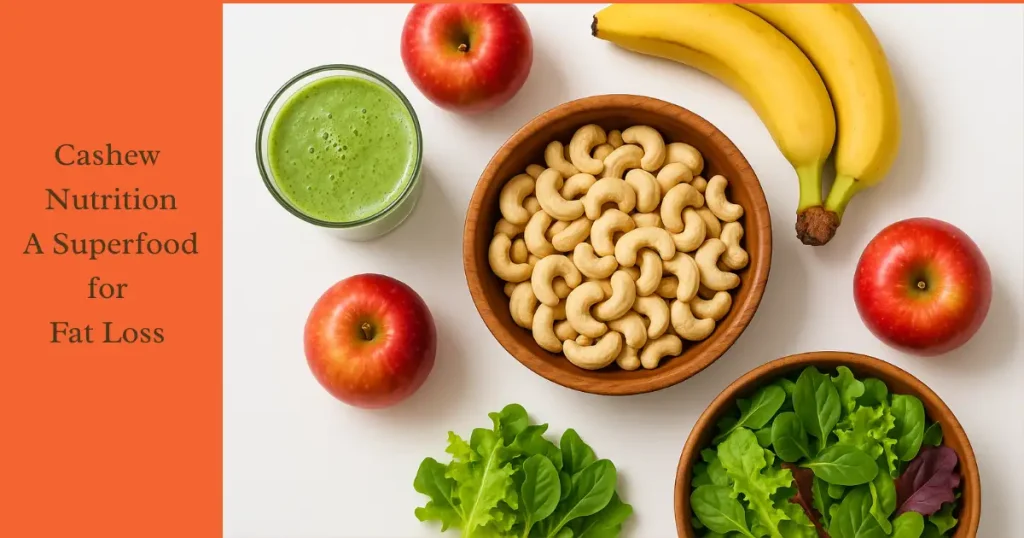
Cashews are more than just a tasty snack. These creamy, crescent-shaped nuts are packed with essential nutrients that support heart health, aid in weight management, and even contribute to a stronger metabolism. However, like any calorie-dense food, it’s essential to consume them wisely—especially if you’re on a fat loss journey.
In this article, we’ll explore the nutritional profile of cashews, their benefits for weight loss, and how to incorporate them smartly into your diet without derailing your goals.
Nutritional Profile of Cashews (Per 28g or ~18 nuts)
| Nutrient | Amount |
|---|---|
| Calories | 157 kcal |
| Protein | 5.1 g |
| Fat | 12.4 g (mostly unsaturated) |
| Carbohydrates | 8.6 g |
| Fiber | 0.9 g |
| Magnesium | 83 mg (20% DV) |
| Copper | 0.6 mg (70% DV) |
| Iron | 1.9 mg (10% DV) |
| Zinc | 1.6 mg (15% DV) |
| Vitamin B6 | 0.1 mg (7% DV) |
Key Nutrients:
- Healthy Fats: Mostly monounsaturated and polyunsaturated fats, which are heart-healthy and support metabolism.
- Plant-Based Protein: Supports muscle repair and satiety.
- Magnesium & Copper: Crucial for bone health, immune function, and energy production.
Are Cashews Good for Weight Loss?
✅ Yes—When Consumed in Moderation
Contrary to the outdated belief that high-fat foods lead to weight gain, research now shows that nut consumption is linked to lower body fat and better metabolic health.
🔬 Scientific Insight:
A 2019 study published in the journal Obesity found that individuals who consumed nuts regularly (including cashews) had a lower risk of long-term weight gain compared to non-consumers.
Here’s Why Cashews Help in Fat Loss:
- Appetite Control
Cashews contain fats and protein that increase satiety, helping you stay fuller for longer and avoid unnecessary snacking. - Blood Sugar Regulation
The healthy fat and fiber in cashews reduce post-meal blood sugar spikes, which helps control insulin and fat storage. - Boosts Metabolism
Cashews are rich in magnesium—a mineral essential for over 300 biochemical reactions in the body, including fat and glucose metabolism.
How to Incorporate Cashews in a Fat Loss Diet
While cashews are healthy, their calorie density means portion control is key. Here’s how to enjoy them without sabotaging your fat loss:
1. Use Them as a Snack Replacement
Instead of chips or sugar-loaded protein bars, grab 15–18 cashews (1 serving) to stay energized between meals.
✅ Tip: Combine with a fruit like an apple for added fiber and sweetness.
2. Add to Smoothies
Add a small handful of raw cashews to your post-workout smoothie to increase creaminess and healthy fats for sustained energy.
3. Sprinkle Over Salads
Chop a few roasted (unsalted) cashews over your salad. They add crunch, flavor, and satiety, especially when you’re cutting carbs.
4. Cashew Butter as a Spread
Use 1 tablespoon of unsweetened cashew butter on whole-grain toast or with banana slices for a balanced snack.
5. Cashew-Based Sauces
Soak raw cashews and blend with garlic, lemon juice, and herbs for a creamy dairy-free sauce. Perfect for pasta or buddha bowls without added sugars.
Best Time to Eat Cashews for Maximum Benefit
🔥 For Weight Loss:
- Mid-morning or afternoon snacks: Prevents hunger crashes.
- Post-workout: Combine with protein for muscle recovery and satiety.
🧠 For Brain Function:
- Morning with breakfast: The healthy fats support cognitive function and focus throughout the day.
Who Should Avoid Cashews?
While cashews are safe for most people, caution is advised in the following cases:
⚠️ Allergies:
- Cashew allergies are common and can be severe. If you have a tree nut allergy, avoid cashews entirely.
⚠️ Kidney Stones:
- Cashews contain oxalates, which may contribute to kidney stones in sensitive individuals. If you’ve had oxalate-based stones before, consult your doctor.
⚠️ Sodium-Sensitive Individuals:
- Avoid salted or processed cashews which can be high in sodium and lead to water retention or elevated blood pressure.
Pro Tips for Buying Cashews
- Choose Raw or Dry-Roasted: Avoid oil-roasted or salted varieties to reduce unnecessary calories and sodium.
- Buy in Small Quantities: Keeps portions in check and avoids overeating.
- Store Properly: Cashews contain unsaturated fats that can go rancid. Keep in an airtight container in a cool place.
Final Thoughts
Cashews are a powerhouse of nutrition—rich in healthy fats, plant-based protein, essential minerals, and antioxidants. When included strategically in a weight loss or wellness diet, they not only help control hunger and support metabolism but also make meals more satisfying and flavorful.
Just remember: moderation is key. Incorporate 1 serving (15–18 cashews per day) into your balanced diet, and you’ll enjoy both their taste and their benefits without guilt.
FAQs
Q: Can I eat cashews daily on a weight loss diet?
A: Yes, but limit your intake to one serving per day (about 28g) to avoid calorie overload.
Q: Are roasted cashews healthy?
A: Dry-roasted (unsalted) cashews are fine. Avoid oil-roasted or flavored varieties.
Q: Do cashews cause weight gain?
A: Only when overeaten. Eaten in the right portion, they actually support fat loss and metabolic health.
About The Author