Updated: November 2025 –
In the world of low-calorie flavored drinks, Crystal Light stands out as one of the most recognizable and widely consumed beverage mixes. Marketed as a healthier alternative to sugary drinks, it appeals to people trying to lose weight, manage diabetes, or reduce calorie intake.
But with all the buzz around sugar substitutes, artificial ingredients, and hidden caffeine, many wonder: What is Crystal Light really made of, and does it contain caffeine? In this article, we’ll break down its ingredients, caffeine content, health implications, and whether it’s a smart choice for your lifestyle.
What Is Crystal Light?
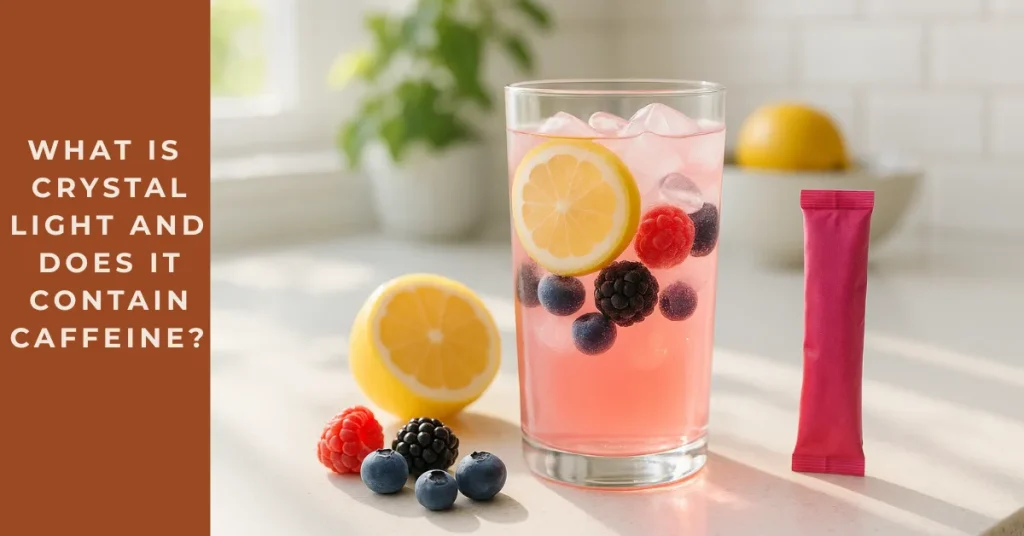
Crystal Light is a powdered drink mix made by Kraft Heinz. When added to water, it creates a flavored, low-calorie beverage. Available in a variety of flavors—like lemonade, raspberry, peach tea, and tropical punch—Crystal Light is especially popular among health-conscious consumers and those avoiding sugary sodas or juices.
The brand markets its products as:
- Low-calorie (most servings have 5–10 calories)
- Sugar-free or low-sugar
- Convenient and customizable (single-serve or multi-serve packets)
Does Crystal Light Contain Caffeine?
The answer is: Some varieties do, and some do not. Caffeine content in Crystal Light depends on the specific flavor and product line.
✅ Caffeinated Varieties (Per Serving):
- Crystal Light Energy (e.g., Wild Strawberry, Citrus, Grape):
Contains about 60 mg of caffeine per serving (equivalent to a small cup of coffee). - Crystal Light Iced Tea Flavors (e.g., Peach Iced Tea, Raspberry Green Tea):
Contains 10–25 mg of caffeine per serving depending on flavor.
❌ Non-Caffeinated Varieties:
- Lemonade
- Fruit Punch
- Raspberry Lemonade
- Tropical Coconut
- Orange Mango
- Pomegranate Cherry
If you’re sensitive to caffeine, be sure to check the label before purchasing.
Read this also : Are You Making This Common Mistake with Nutrition Drinks?
Crystal Light Ingredients Breakdown
Here’s what you typically find in a serving of Crystal Light (ingredients may vary slightly by flavor):
- Citric Acid – For tartness and flavor enhancement
- Artificial Sweeteners – Usually Aspartame or Sucralose, depending on flavor
- Natural and Artificial Flavors – To mimic fruit or tea flavor profiles
- Color Additives – Such as Yellow 5 or Red 40
- Caffeine – In select flavors (mostly labeled “Energy” or “Tea”)
- Maltodextrin – A carbohydrate used as a filler or stabilizer
- Sodium Citrate – Helps regulate acidity
💡 Note: Some versions of Crystal Light also contain B vitamins (like B3, B6, B12) to support energy metabolism, especially in the “Energy” line.
Nutritional Facts (Per Serving)
| Component | Typical Amount |
|---|---|
| Calories | 5–10 |
| Sugar | 0 g |
| Carbohydrates | 1–2 g |
| Caffeine (Energy) | 60 mg |
| Artificial Sweeteners | Aspartame/Sucralose |
Is Crystal Light a Healthy Choice?
This depends on your definition of “healthy” and your personal health goals. Here’s a breakdown of pros and cons based on expert analysis and scientific research.
Read this also : Smirnoff Ice: What You Need to Know About This Popular Ready-to-Drink Beverage
✅ Pros of Crystal Light
- Low in Calories – Ideal for weight management or cutting sugar
- No Sugar Spikes – Suitable for diabetics when used in moderation
- Hydration Support – Encourages water consumption for those who dislike plain water
- Caffeine Option Available – Can be a low-calorie alternative to coffee or soda
- Portable and Convenient – Easy to carry and mix on-the-go
❌ Potential Concerns
- Artificial Sweeteners (Aspartame, Sucralose)
- Some people report headaches or digestive issues from these
- Long-term health effects remain debated, though FDA deems them safe
- Artificial Colors
- Ingredients like Red 40 and Yellow 5 are controversial for their link to behavioral issues in children and potential allergens
- Caffeine Sensitivity
- Even 60 mg can cause jitters or sleep issues in sensitive individuals
- Not a Nutrient Source
- While it helps flavor water, it doesn’t offer substantial nutritional value
Who Should and Shouldn’t Drink Crystal Light?
✅ Recommended For:
- People trying to reduce soda or juice intake
- Those on a low-carb or keto diet
- Diabetics (with doctor approval)
- Anyone seeking low-calorie flavored beverages
- Travelers or gym-goers needing convenient hydration
❌ Not Recommended For:
- Children (due to artificial sweeteners and colors)
- Pregnant or breastfeeding women (due to aspartame and caffeine concerns)
- Individuals with PKU (Phenylketonuria) – They must avoid aspartame
Alternatives to Crystal Light
If you’re looking for more natural or whole-food-based options, here are some healthier alternatives:
- Infused Water: Add lemon, cucumber, mint, or berries to your water
- Electrolyte Powders: Look for brands with natural ingredients and no artificial sweeteners
- Cold Brew Herbal Teas: Naturally caffeine-free and flavorful
- Stevia- or Monk Fruit–Sweetened Drink Mixes: Often use fewer artificial ingredients
Final Verdict: Should You Drink Crystal Light?
Crystal Light is generally safe for healthy adults when consumed in moderation. It’s a low-calorie, sugar-free beverage option that can support hydration, especially for those trying to avoid high-sugar drinks.
However, if you are sensitive to artificial ingredients or caffeine, you may want to limit your intake or consider natural alternatives.
📌 Expert Tip: Always read the label. Not all Crystal Light products are caffeine-free, and ingredients can vary across flavors and countries.
Frequently Asked Questions (FAQs)
Q1: Is Crystal Light keto-friendly?
Yes. Most Crystal Light flavors have little to no carbs and are suitable for ketogenic diets.
Q2: Is it okay to drink Crystal Light every day?
Moderation is key. While occasional use is fine for most people, drinking multiple servings daily may increase your exposure to artificial sweeteners and additives.
Q3: Does Crystal Light break a fast?
It likely will not break a fast, especially if consumed during intermittent fasting for weight loss, as it has minimal calories.
Q4: Is there Crystal Light without artificial sweeteners?
Currently, most flavors do contain artificial sweeteners. For a natural option, consider infused water or mixes sweetened with stevia.
Detailed Aspartame Safety Research (Updated November 2025)
Aspartame, one of the primary artificial sweeteners in Crystal Light, has been extensively studied since its approval in the 1980s. The World Health Organization’s 2023 classification labeled it as “possibly carcinogenic to humans” (Group 2B) based on limited evidence in experimental animals, but reaffirmed an ADI of 40 mg/kg body weight/day. However, regulatory bodies like the FDA maintain that aspartame is safe for general use at current consumption levels.
Key NIH/PubMed Studies on Aspartame Safety:
- A 2007 comprehensive review in Critical Reviews in Toxicology analyzed over 100 toxicological and epidemiological studies, concluding no adverse effects from aspartame up to 4,000 mg/kg body weight/day in animal models—far exceeding human exposure levels (e.g., equivalent to consuming thousands of diet sodas daily). Human epidemiological data showed no links to cancer, neurological issues, or other diseases.
- A 2017 PubMed review revisited aspartame’s safety, noting potential oxidative stress at doses above the ADI, but emphasized that typical intake (e.g., 5–10 mg/kg from one serving of Crystal Light) remains well below safe thresholds. It called for more long-term human studies on vulnerable groups like children.
- Recent 2021–2024 NIH-funded research, including a narrative review in Nutrients, examined genotoxicity and found no conclusive evidence of DNA damage or cancer risk at approved levels, though metabolic byproducts (aspartic acid, phenylalanine, methanol) warrant monitoring in high consumers. Another 2023 PMC article highlighted subtle mood changes in some high-dose human trials but affirmed overall safety for most adults.
FDA GRAS Status and Regulations: Aspartame is not listed under GRAS (21 CFR Parts 182/184) but is regulated as a food additive under 21 CFR 172.804, with an ADI of 50 mg/kg body weight/day—higher than the WHO’s 40 mg/kg. The FDA’s Food Additive Status List confirms its approval for use as a sweetening agent in products like Crystal Light, with no upper limit other than GMP (Good Manufacturing Practice). For context, a 70kg adult could safely consume about 18 cans of diet soda (or equivalent Crystal Light servings) daily without exceeding the ADI.
| Aspect | Key Finding | Source/Link |
|---|---|---|
| Cancer Risk | No consistent human links; limited animal evidence at high doses | NIH/PubMed Review (2023) |
| Neurological Effects | Safe at ADI; potential oxidative stress above limits | NIH/PubMed (2017) |
| FDA Approval Status | Food additive (not GRAS), ADI 50 mg/kg | FDA High-Intensity Sweeteners |
| GRAS List Confirmation | Regulated under 21 CFR 172.804 | FDA Food Additive Status List |
Counterpoint: Ongoing Debates While the FDA and EFSA deem aspartame safe, critics point to the Ramazzini Institute’s rodent studies showing tumor risks near ADI levels, prompting IARC’s 2023 “possibly carcinogenic” label. A 2019 NHLBI-quality appraisal of epidemiology studies found no strong cancer associations but noted limitations in sample sizes. For Crystal Light users, sticking to 1–2 servings daily minimizes risks.
This research underscores that aspartame’s long-term effects are debated but generally supportive of safety in moderation. Consult a doctor if you have PKU or sensitivities
About The Author