
Introduction
Planning a tasty Janmashtami fasting diet ensures that you stay energized throughout the day and can participate fully in prayers and festivities. Janmashtami the celebration of Lord Krishna’s birth, is a major festival in Agra, India, observed with devotion, temple visits, and day-long fasting. For devotees, fasting is not only a spiritual act but also an opportunity to detoxify the body with wholesome sattvic foods.
In this guide, WarriorWorkoutFitness brings you expert-approved fasting foods, their nutritional benefits, and how they align with both health and spiritual traditions—crafted especially for local readers in Agra who want to observe fasts in a balanced and flavorful way.
Why Follow a Tasty Janmashtami Fasting Diet?
Fasting during Janmashtami isn’t merely abstaining from food; it is a mindful practice of purification. In cities like Agra, where temple visits (such as Banke Bihari Mandir, Vrindavan, just an hour away) and midnight Krishna Jhulan ceremonies are common, fasting devotees need sustained energy to participate in rituals.
Benefits of Fasting on Janmashtami:
- Spiritual Upliftment: Enhances concentration during bhajans and prayers.
- Detoxification: Sattvic foods help cleanse the digestive system.
- Energy Boost: Proper fasting foods maintain stamina for the midnight puja.
- Cultural Connection: Traditional dishes bring families together in celebration.
Principles of a Healthy Janmashtami Fasting Diet
To ensure both taste and nutrition, your fasting meals should be:
- Sattvic (Pure): Avoid onion, garlic, grains, and heavy spices.
- Locally Available: Use seasonal fruits, fresh milk, and nuts common in Agra’s markets.
- Easily Digestible: Focus on light yet filling foods to prevent fatigue.
- Hydrating: Maintain fluid intake with water, buttermilk, or coconut water.
Foods You Can Eat During Janmashtami Fasting Diet
Here is a curated list of tasty and nutritious fasting foods for Janmashtami that align with Vrat-friendly rules:
1. Fresh Fruits and Dry Fruits
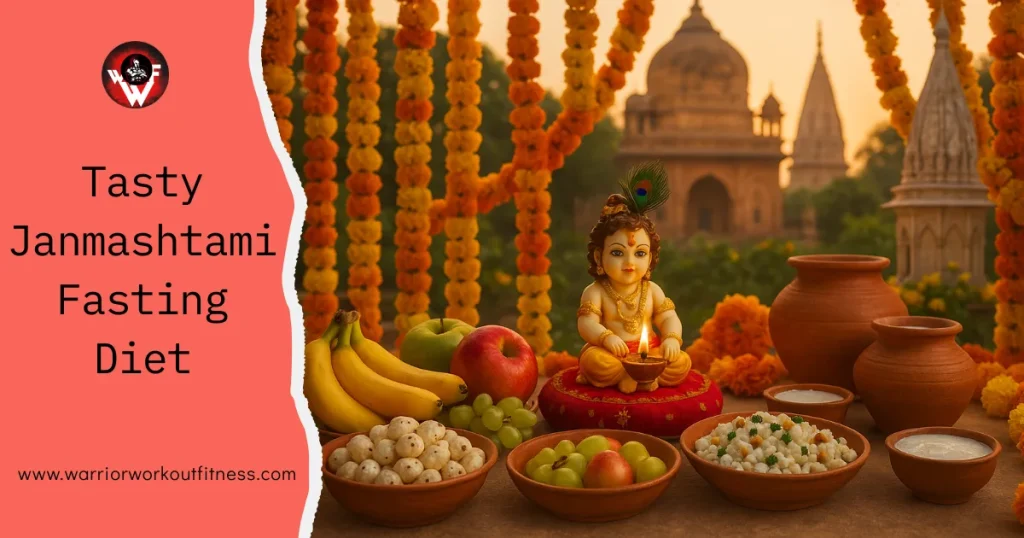
- Seasonal Options in Agra: Banana, apple, papaya, pomegranate.
- Benefits: Provides natural sugar for instant energy; rich in fiber and antioxidants.
- How to Eat: Prepare a fruit salad topped with chopped almonds, cashews, and raisins.
2. Makhana (Fox Nuts)
- Why Include: High in protein and calcium; light yet filling.
- Preparation: Roast with ghee and sendha namak (rock salt) for a crispy snack.
3. Sabudana (Sago) Dishes
- Popular Choice: Sabudana khichdi or kheer.
- Nutritional Value: Carbohydrate-rich, provides sustained energy during fasting.
- Tip: Soak overnight and cook with peanuts for extra crunch.
4. Singhara (Water Chestnut) and Kuttu (Buckwheat) Flour
- Use in Recipes: Puri, halwa, or cheela made from buckwheat flour.
- Health Benefit: Gluten-free and rich in minerals—perfect for those avoiding grains.
5. Dairy Delights
- Local Freshness: Agra is known for high-quality milk and paneer.
- Options: Lassi, dahi, or shrikhand made with jaggery for sweetness.
- Spiritual Aspect: Milk products are symbolic offerings to Lord Krishna.
6. Coconut and Coconut Water
- Hydration Power: Prevents dehydration during day-long fasts.
- Versatile Use: Grated coconut in laddoos or coconut water as a refreshing drink.
What to Eat in Janmashtami Fast
Janmashtami, the auspicious festival celebrating the birth of Lord Krishna, is observed with devotion and fasting by millions of Hindus across the world. The Janmashtami fast (vrat) symbolizes purity, self-control, and spiritual awakening. During this period, devotees abstain from grains, cereals, and certain spices, focusing instead on sattvik (pure and easily digestible) foods that provide sustained energy and aid in meditation and devotion.
Nutritionally, Janmashtami fasting emphasizes foods rich in natural sugars, proteins, and healthy fats that prevent fatigue during long fasting hours. According to the Indian Journal of Nutrition and Dietetics (2021), balanced vrat meals made from ingredients like sabudana (tapioca pearls), singhara (water chestnut flour), and rajgira (amaranth) provide complex carbohydrates and essential amino acids, ensuring stable energy levels. Fresh fruits such as bananas, apples, and pomegranates supply vitamins, minerals, and antioxidants, helping maintain hydration and metabolism. Dairy products like milk, curd, and paneer are also key sources of protein and calcium, offering strength and satiety without breaking traditional fasting rules.
To maintain electrolyte balance and prevent weakness, natural drinks like coconut water, buttermilk, and lemon water with rock salt are highly beneficial. Deep-fried or overly sweet dishes should be consumed in moderation to avoid energy crashes. In essence, Janmashtami fasting is not merely a religious ritual but also a form of mindful eating—encouraging natural, wholesome, and nutrient-rich foods that nourish both body and soul.
Recommended Foods for Janmashtami Fast
| Food Category | Examples | Nutritional Benefits | Remarks |
|---|---|---|---|
| Fasting Grains & Flours | Sabudana, Singhara, Rajgira, Samak rice | Provide slow energy release and essential amino acids | Easily digestible and gluten-free |
| Fruits | Banana, Apple, Pomegranate, Papaya | Rich in vitamins, fiber, and antioxidants | Maintain hydration and immunity |
| Dairy Products | Milk, Curd, Paneer | High in protein and calcium | Keeps you full and energized |
| Nuts & Seeds | Almonds, Walnuts, Foxnuts (Makhana) | Provide healthy fats, protein, and omega-3s | Boost brain and heart health |
| Natural Drinks | Coconut Water, Lemon Water, Buttermilk | Maintain electrolyte balance and hydration | Prevents weakness during fast |
| Sweet Options | Kheer (with sabudana or makhana), Ladoo (with rajgira or dry fruits) | Source of instant energy | Consume in moderation |
| Spices & Seasonings | Rock Salt (Sendha Namak), Black Pepper, Cumin | Aid digestion and maintain mineral balance | Regular salt is avoided during fast |
Sample Tasty Janmashtami Fasting Diet Plan (One Day)
Morning (Pre-Fast)
- Warm water with lemon (detox).
- Fresh fruits like papaya or banana for natural energy.
Mid-Morning (Fasting Snack)
- Handful of roasted makhana with rock salt.
- Coconut water for hydration.
Afternoon Meal
- Sabudana khichdi with peanuts and mild spices.
- Curd or buttermilk to aid digestion.
Evening Snack (Before Temple Visit)
- Fruit chaat with dry fruits and honey drizzle.
- Herbal tea (tulsi or ginger).
Night (Post-Midnight Puja)
- Singhara flour halwa with ghee.
- Warm milk with cardamom for restful sleep.
Local Tips for Observing Janmashtami Fast in Agra
- Temple Visits: Famous spots like Dwarkadheesh Mandir host special bhajans; carry light fruits for quick energy.
- Crowd Management: Markets near Sadar Bazar or Sanjay Place are busy; plan shopping early for fresh ingredients.
- Weather Consideration: August humidity in Agra demands higher fluid intake—opt for lassi or coconut water.
- Community Feasts: Participate in prasad distribution but ensure foods comply with your fasting rules.
Expert Advice for Balanced Fasting
Nutritionists recommend combining complex carbs (sabudana) with protein (nuts, dairy) to prevent energy dips. Avoid deep-fried vrat snacks, which may cause lethargy. Instead, choose baked or lightly sautéed options.
Key Nutritional Takeaways:
- Prioritize hydration to combat Agra’s summer heat.
- Use natural sweeteners like jaggery or honey instead of refined sugar.
- Keep portion sizes moderate to prevent post-fast discomfort.
Spiritual Significance of Fasting on Janmashtami
Fasting is more than physical abstinence; it is a form of devotional discipline (bhakti). By consuming sattvic foods, devotees align body and mind with spiritual energies, making prayers more focused and heartfelt. This is why foods like milk, makhana, and fruits—beloved by Lord Krishna—are staples of this festival.
Conclusion
A tasty Janmashtami fasting diet ensures you stay nourished, spiritually connected, and able to celebrate the birth of Lord Krishna with energy and devotion. By choosing wholesome sattvic foods like fruits, sabudana, makhana, and dairy, you embrace both health and tradition—perfect for Agra’s vibrant festive spirit.
This Janmashtami, plan your fasting meals mindfully and share this guide from WarriorWorkoutFitness with family and friends to inspire balanced celebrations. May your fast bring health, peace, and blessings of Lord Krishna!
FAQs
Q1. What foods are allowed in Janmashtami fasting diet?
Fruits, dry fruits, sabudana, makhana, singhara flour dishes, and dairy products like milk and curd are commonly included in Janmashtami fasting diets.
Q2. Can we eat cooked food during Janmashtami fast?
Yes, vrat-friendly cooked dishes like sabudana khichdi, kuttu puri, or singhara halwa can be eaten, provided they are prepared without grains or regular salt.
Q3. How can I stay energized during Janmashtami fasting in Agra?
Include hydrating foods like coconut water and buttermilk, along with energy-rich makhana, fruits, and nuts to maintain stamina during temple visits and celebrations.
Q4. Is Janmashtami fasting safe for everyone?
Healthy adults can fast comfortably, but children, the elderly, or people with medical conditions should consult a doctor and opt for partial fasting with fruits or milk.
Q5. What is the spiritual benefit of following a Janmashtami fasting diet?
Fasting purifies the body and mind, deepens devotion, and honors Lord Krishna’s birth by consuming sattvic foods loved by Him.
You May Also Like: How To Make Gond Katira and Its Benefits, Crown Apple Whiskey Nutrition Facts
Follow Us : Instagram, Facebook
About The Author