
Diwali Foods: A Delicious Journey Through Traditional, Modern & Healthy Life
Table of Contents
- Introduction: The Flavors of Diwali
- The Cultural Significance of Diwali Food
- Traditional Diwali Sweets You Can’t Miss
- Gulab Jamun
- Ladoo
- Barfi
- Kaju Katli
- Jalebi
- Savory Snacks for Diwali Celebrations
- Samosa
- Chakli / Murukku
- Mathri
- Chivda
- Namak Pare
- Regional Variations of Diwali Food
- North India
- South India
- West India
- East India
- Modern & Healthy Diwali Food Trends (2025 Edition)
- Vegan Diwali Sweets
- Sugar-Free Options
- Fusion Desserts
- Millet-Based Snacks
- How to Prepare a Perfect Diwali Thali
- Cooking Tips & Health-Friendly Substitutions
- Infographic: Top 10 Popular Diwali Foods
- FAQs About Diwali Food
- Conclusion: Diwali Is a Feast for the Heart
- Cultural References & Sources
Introduction: The Flavors of Diwali Food
Every Indian home during Diwali smells of something special — the warm sweetness of ghee, the crisp crackle of frying snacks, and the comforting aroma of cardamom and saffron wafting through the air.
Known as the Festival of Lights, Diwali is celebrated not just with diyas and fireworks, but also through food — the true heart of every Indian celebration. Whether you’re in Mumbai, Chennai, or New York, Diwali food connects families, neighbors, and communities through love and shared flavor.
So, what food do you eat for Diwali? Let’s dive into the most loved traditional Diwali sweets, snacks, and modern trends that make this festival unforgettable.
The Cultural Significance of Diwali Food
Food during Diwali isn’t just about indulgence — it’s deeply symbolic. Each sweet or snack represents prosperity, purity, and togetherness. Offering sweets to deities and sharing them with guests signifies spreading joy and abundance.
Historically, many Diwali recipes were prepared using seasonal ingredients — fresh ghee, chickpea flour, lentils, and jaggery — not only for taste but also to nourish the body during seasonal change.
From the kitchens of royal Rajasthan to humble village homes in Tamil Nadu, food during Diwali celebrates India’s culinary diversity and its shared love for festivity through flavor.
Related Post : Benefits of Sattvic Diet
Traditional Diwali Sweets You Can’t Miss
No Diwali celebration is complete without a table full of sweets — the first thing offered to guests and gods alike. Let’s explore some of the most cherished traditional Diwali sweets:
1. Gulab Jamun – The Golden Classic
Soft, syrup-soaked dumplings made from khoya or milk powder, Gulab Jamun is often the first sweet to vanish at any Diwali gathering. Its golden-brown exterior and melt-in-mouth texture symbolize luxury and warmth.
Pro Tip: Try baking or air-frying your gulab jamuns and soaking them in warm sugar syrup for a healthier twist.
2. Ladoo – The Sweet of Every Home
From besan ladoo to rava ladoo, these round treats vary by region but share the same love. The spherical shape represents wholeness and unity.
Healthy Version: Replace refined sugar with jaggery or coconut sugar, and use almond flour for a gluten-free option.
3. Barfi – Fudge with a Festive Touch
Made from condensed milk and sugar, barfi comes in endless varieties — kaju barfi, pista barfi, chocolate barfi, and even rose-infused barfi. Its diamond shape is iconic during gift exchanges.
Modern Trend (2025): Try vegan coconut barfi with oat milk and natural sweeteners.
4. Kaju Katli – The Royal Sweet
A thin, diamond-shaped cashew delight, Kaju Katli is among the most gifted Diwali sweets. The smooth texture and subtle sweetness make it elegant yet addictive.
Cultural Fact: The word katli literally means “slice” in Hindi.
5. Jalebi – The Spiraled Symbol of Celebration
Crisp, syrupy, and irresistible — Jalebi adds sparkle to every Diwali thali. Best enjoyed hot, it’s paired with rabri in North India for an extra indulgent experience.
Pro Tip: Ferment the batter overnight for authentic flavor and crispness.
<a name=”snacks”></a>
Savory Snacks for Diwali Celebrations
While sweets steal the spotlight, savory snacks balance the feast. They’re crunchy, spiced, and often enjoyed during family game nights or tea breaks during the five days of Diwali.
1. Samosa – The Evergreen Favorite
Triangular pastries filled with spiced potatoes or peas, samosas are the ultimate festive snack. During Diwali, they’re often smaller in size and served with tamarind chutney.
Air-Fry Option: Brush lightly with oil and air-fry for a low-fat version.
2. Chakli / Murukku – The Spiral Crunch
Originating from South India, this crispy spiral snack made from rice flour or chickpea flour is now a pan-Indian favorite.
Trivia: Maharashtra calls it Chakli, Tamil Nadu says Murukku — both meaning “twist”!
3. Mathri – The Savory Biscuit
These flaky, spiced crackers are perfect with chai. Traditionally made with whole wheat flour and ajwain (carom seeds), Mathri symbolizes the balance of taste and texture in festive spreads.
4. Chivda – The Festive Trail Mix
A delightful mix of flattened rice, nuts, curry leaves, and spices, Chivda is both light and addictive.
Modern Twist: Use baked ingredients and olive oil instead of deep-frying.
5. Namak Pare – Crunchy Bites of Joy
These crispy, salted dough sticks are a must-have during Diwali. Easy to store, they’re often made in bulk and shared with neighbors.
Pro Tip: Flavor them with kasuri methi (dried fenugreek) or ajwain for a unique aroma.
Regional Variations of Diwali Food
India’s diversity shines through its regional Diwali dishes. Here’s a delicious snapshot:
North India
Diwali feasts in the north feature pooris, aloo sabzi, paneer curries, and halwa varieties like moong dal halwa and carrot halwa (gajar ka halwa). In Punjab, people enjoy kheer made with rice and milk, symbolizing prosperity.
South India
In Tamil Nadu and Karnataka, murukku, adhirasam, payasam, and boondi ladoo dominate the menu. Coconut and jaggery-based sweets take center stage, celebrating purity and tradition.
West India
Gujarat celebrates with farsan, sev, thepla, and sweets like sukhdi and mohanthal. Maharashtrian homes prepare shankarpali and anarse, both symbolic of abundance.
East India
Bengal lights up with rasgulla, sandesh, and chamcham, while Odisha and Assam enjoy pitha (rice cakes) and payesh. The influence of sweets made from fresh chhena (cottage cheese) is unmistakable.
Modern & Healthy Diwali Food Trends (2025 Edition)
As health and sustainability gain momentum, modern Diwali foods are evolving beautifully — balancing indulgence with well-being.
1. Vegan Diwali Sweets
Plant-based desserts like almond milk rasmalai or coconut jaggery ladoos are trending. They retain the richness without dairy, perfect for vegan or lactose-intolerant guests.
2. Sugar-Free & Low-GI Options
Chefs and home cooks now use natural sweeteners like stevia, dates, and jaggery. Sugar-free motichoor ladoos or diabetic-friendly barfi are great for mindful celebrations.
3. Fusion Desserts
Think gajar halwa cheesecake, gulab jamun cupcakes, or rasmalai tiramisu — combining East and West. Fusion foods bring creativity to traditional flavors and attract younger audiences.
4. Millet-Based Snacks
With India’s millet revolution, dishes like ragi chakli, foxtail murukku, and bajra mathri are gaining popularity for their high fiber and gluten-free benefits.
5. Air-Fried and Baked Goodies
From baked samosas to air-fried namak pare, modern kitchens are swapping deep-frying for healthier cooking methods — without losing crunch or taste.
How to Prepare a Perfect Diwali Thali
A Diwali thali is a symbolic platter representing abundance and gratitude. Here’s what a balanced one might include:
| Category | Example Dish | Symbolism |
|---|---|---|
| Sweet | Kaju Katli / Ladoo | Prosperity |
| Savory | Mathri / Chakli | Balance of life |
| Main Course | Pulao / Poori & Paneer | Celebration of abundance |
| Dessert | Kheer / Halwa | Sweet beginnings |
| Drink | Rose milk / Lassi | Refreshment and purity |
Pro Tip: Decorate your thali with banana leaves, marigold petals, and small diyas for an authentic festive feel.
Cooking Tips & Health-Friendly Substitutions
- Swap sugar for jaggery or dates for natural sweetness.
- Use ghee sparingly — even a teaspoon adds rich aroma.
- Switch to whole grains like millet or oats in snacks.
- Add nuts and seeds for healthy fats.
- Bake or air-fry instead of deep-frying to cut calories.
Remember: Diwali is about balance — enjoying treats mindfully while celebrating life’s sweetness.
Infographic: Top 10 Popular Diwali Foods
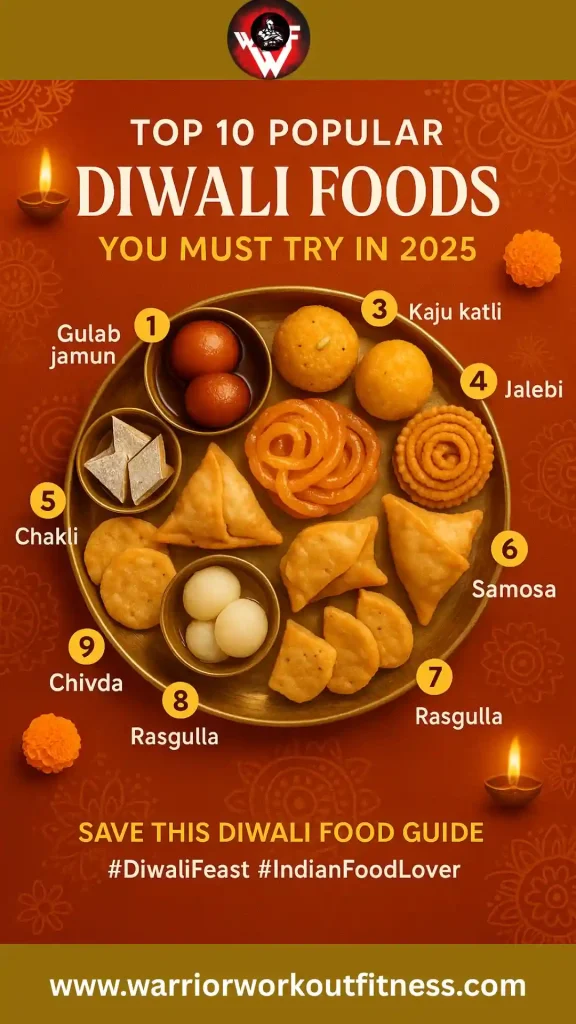
Title: Top 10 Popular Diwali Foods in India (2025)
- Gulab Jamun
- Kaju Katli
- Ladoo
- Jalebi
- Chakli
- Samosa
- Mathri
- Rasgulla
- Chivda
- Barfi
Tip: Use vibrant colors like saffron, maroon, and gold for design aesthetics.
FAQs About Diwali Food
Q1. What is the most popular food for Diwali?
Gulab Jamun and Kaju Katli remain top favorites across India, followed closely by ladoos and chakli.
Q2. What do vegetarians eat for Diwali?
Most Diwali foods are vegetarian, including sweets, snacks, and festive curries like paneer butter masala or aloo matar.
Q3. What are healthy Diwali food options?
Opt for baked or air-fried snacks, jaggery-based sweets, and millet or oats-based recipes.
Q4. What food is offered to Goddess Lakshmi?
Sweets like coconut ladoo, kheer, and rice dishes are offered during Lakshmi Puja for prosperity and blessings.
Q5. Can Diwali food be made vegan or gluten-free?
Absolutely. Replace ghee with coconut oil, dairy with almond milk, and use gluten-free flours like ragi or rice flour.
Conclusion: Diwali Is a Feast for the Heart
Diwali is more than a festival — it’s a reminder that light always triumphs over darkness, and food is the language through which we express that joy. Whether you’re rolling ladoos with your grandmother or experimenting with vegan gulab jamuns, every dish tells a story of heritage, family, and love.
So, this Diwali, cook with heart, share with joy, and let your kitchen glow as brightly as your diyas.
What’s your favorite Diwali sweet? Share your stories in the comments — your festive memory might inspire someone’s next Diwali menu!
Cultural References & Sources
- Ministry of Culture, Government of India – Traditional Indian Festivals & Food Practices
- Indian Culinary Forum, 2024 – Evolution of Festival Foods in Modern India
- The Hindu Food Section, 2023 – Healthy Diwali Recipes for Conscious Eaters
- Chef Ranveer Brar Interviews – Regional Diwali Sweets and Their Significance
- National Institute of Nutrition, Hyderabad – Nutritional Aspects of Indian Festival Foods
Follow us on: Facebook,Instagram
About The Author