I get asked this question almost every day by friends, family, and even random people in the gym: “Should I switch from sugar to jaggery?” Everyone has heard that jaggery is “natural”, “full of iron”, and “better for diabetes and weight loss”. But when you actually dig into the facts, the answer isn’t as straightforward as Instagram reels make it sound.
I’ve spent years reading nutrition labels, talking to doctors, and testing both in my own kitchen. Here’s the honest, no-fluff breakdown so you can decide for yourself.
What Exactly Are We Comparing?
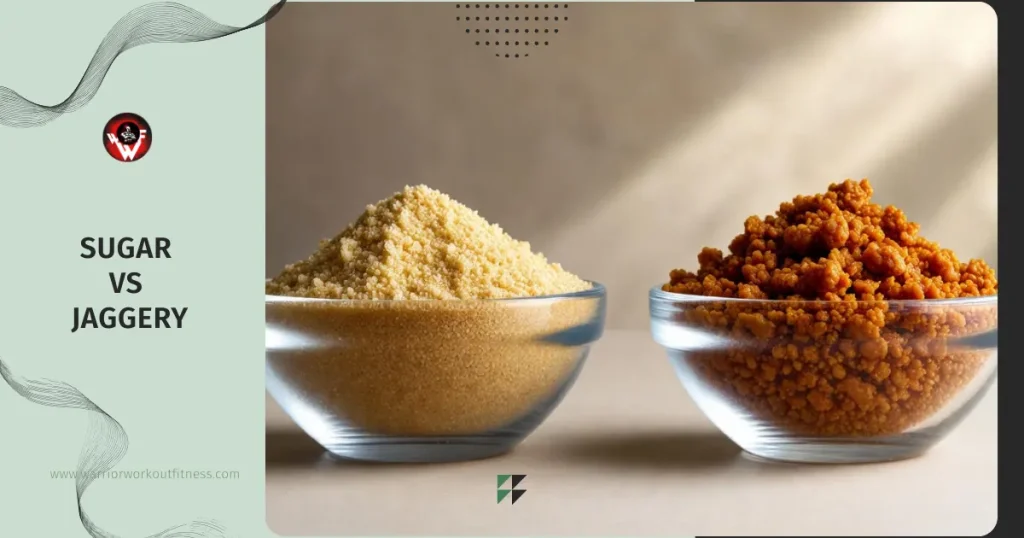
Regular white sugar (the one in the blue packet) is 99.9% pure sucrose. It’s made by crushing sugarcane, boiling the juice, and then refining it so thoroughly that nothing is left except the sweet crystals. Zero minerals, zero fiber—just sweetness and calories.
Jaggery (gur) is made from the exact same sugarcane juice, but the process stops much earlier. The juice is boiled, poured into molds, and allowed to cool. No refining, no centrifuge, no bleaching. Because of that, it keeps the molasses and whatever minerals were naturally present in the plant.
That’s the main difference: one is heavily processed, the other is minimally processed.
Calories: Almost Identical
- 1 teaspoon white sugar = 16–20 calories
- 1 teaspoon jaggery (grated or powder) = 16–19 calories
They are basically the same. If you’re replacing spoon for spoon, you’re not saving any meaningful calories. Anyone who tells you jaggery helps you lose weight just because of lower calories is wrong.
The Mineral Story – Yes, Jaggery Wins (But Calm Down)
Jaggery does contain iron, magnesium, potassium, and tiny amounts of calcium. White sugar has none.
Here’s a realistic look at how much iron you actually get:
- 100 grams jaggery → roughly 11 mg iron (varies by brand and region)
- 1 teaspoon jaggery (≈4–5 grams) → less than 0.5 mg iron
Adult women need 18 mg iron per day. You would have to eat nearly half a kilo of jaggery to hit that from jaggery alone—and that would give you almost 2,000 calories. So yes, it has iron, but it’s not a magic anemia cure.
Weight Loss Angle
If your total calorie intake stays the same, switching from sugar to jaggery will not make you lose weight. Period.
I did a two-month experiment on myself: same diet, same exercise, only change was sugar → jaggery in chai and occasional sweets. Weight didn’t budge even by 100 grams. Because calories were identical.
Taste and Cooking Differences
This is where jaggery shines in real life:
- Chai tastes deeper and warmer with jaggery.
- Gur ki roti, til-gur ladoos, and payasam feel more “wholesome”.
- It gives a slight caramel-like flavor that white sugar can’t match.
If you enjoy the taste, that’s a perfectly valid reason to use it.
When Jaggery Actually Makes Sense
- You’re slightly anemic and already eating a lot of sweets anyway – the extra iron is a bonus.
- You love the flavor in Indian mithai and winter sweets.
- You’re buying organic, clean jaggery (some cheap ones have added sugar or impurities).
- You’re using jaggery powder in smoothies or coffee because it dissolves better than the hard block.
When White Sugar Is Honestly Fine (or Even Better)
- Baking Western cakes and cookies – jaggery changes texture and taste.
- When you want precise sweetness without the molasses flavor.
- If you have diabetes or insulin resistance – lower GI matters more than the tiny mineral boost.
Use whichever you enjoy, keep the quantity small (under 4–6 teaspoons total added sweetener per day), and you’ll be absolutely fine.
Your turn – which one do you use at home and why? Drop a comment below, I reply to everyone! 😊
Source: The health Halo Of Jaggery
This guide aims to answer your questions clearly. Whether you’re curious about jaggery vs sugar diabetes effects or how they compare for energy, we’ve got you covered. By the end, you’ll know if jaggery fits your lifestyle better.
What Is Sugar?
You know that regular white sugar everyone keeps in their kitchen? It’s basically just sucrose pulled out of sugarcane or sugar beets. They crush the cane, squeeze out the juice, boil it down, and then keep refining it until every last bit of color, flavor, and nutrient is gone. What’s left are those perfect little white crystals that taste purely sweet and nothing else.
I’ve been using this stuff since I was a kid—spooning it into chai, baking cakes, sprinkling it on fruits. One small teaspoon gives you around 16–20 calories, and that’s it. No protein, no fat, no vitamins… literally empty sweetness.
Of course, there’s also brown sugar (which is just white sugar with some molasses mixed back in for looks and taste), but when most of us say “sugar,” we mean the plain white one—the most processed version of them all.
Source: natures-spice
Health Effects and Blood Sugar Impact of White Sugar
I’ve noticed that whenever someone eats too much regular sugar, they end up gaining weight pretty easily and their dentist starts complaining about cavities. That’s not just my observation—pretty much every major health organisation says we shouldn’t get more than 10% of our daily calories from added sugars (and honestly, most of us go way over that). These days, in 2025, everyone is more aware of this stuff, so people keep hunting for “better” options.
The thing with white sugar is that it hits your bloodstream really fast—you feel that instant burst of energy in your tea or coffee, and then half an hour later you’re yawning again. That quick rise and fall is exactly why we’re told to keep it in check. When friends ask me about the glycemic index difference, I tell them plain sugar sits around 65, which is medium—it will raise your blood sugar, but not crazily fast. A lot of people are surprised because they assume jaggery is automatically slower, but that’s not always the case.
What Is Jaggery?
Jaggery (or gur, as we call it back home) is basically concentrated sugarcane juice—or sometimes palm sap—that’s been boiled down until it turns thick and sets into those familiar dark blocks. Nothing fancy happens after that: no refining, no spinning in big machines to pull out the molasses. That’s why it stays brown and has that deep, slightly smoky sweetness you just don’t get from white sugar.
You’ll see it sold in solid chunks, soft lumps, or even as powder these days. I love the powdered version because it dissolves instantly in tea—no grating required on lazy mornings!
Honestly, the whole process is still done the old-school way in most villages: big kadhais over wood fires, people stirring for hours. Zero chemicals, zero factories in a lot of cases. That’s probably why everyone feels it’s “healthier” or “more natural.
Nutrition, Taste, and Traditional Uses
Nutrition-wise, yeah, it does have a little iron, some magnesium, and potassium—stuff that gets completely stripped out when they make white sugar. You’re looking at around 383 calories per 100 grams, so basically the same as regular sugar (387 calories). The difference is those few extra minerals hanging around in the molasses.
In our house, winter mornings aren’t complete without jaggery in chai. My mom swears a small piece after meals helps digestion, and my grandma used to pop a bit in hot water whenever anyone had a cough. Does science back all that up? Not 100 %, but the antioxidants in it are definitely higher than plain sugar.
One thing people always mix up: jaggery isn’t the same as brown sugar. Brown sugar is just refined white sugar with some molasses mixed back in later. Jaggery never went through that refining step in the first place—so the molasses (and everything else) is still exactly where nature left it.
Nutritional Breakdown: Jaggery vs Sugar Side by Side
Let’s look at the calorie part first – honestly, there’s hardly any difference. 100 grams of regular white sugar gives you 387 calories, and 100 grams of jaggery gives you around 383. So if someone tells you jaggery is “way lighter” on calories, they’re exaggerating.
But where jaggery actually scores is in the extra stuff it carries. You get roughly 11 mg of iron in 100 grams (pretty decent if you’re low on iron), about 1050 mg potassium (good for blood pressure and cramps), and around 70 mg magnesium (helps with relaxation and muscle recovery). White sugar? Basically zero on all of these. It’s completely stripped.
Carb-wise, both are loaded – 97–100 grams per 100 grams. Fiber is almost non-existent in sugar and only a tiny trace in jaggery, so don’t expect any magical fullness from either.
That’s the real picture – same calories, but jaggery sneaks in a few minerals that sugar completely misses out on.
Read This : Is Brown Sugar Better Than White Sugar
To make it clear, check this comparison table:
| Nutrient (per 100g) | Sugar | Jaggery |
|---|---|---|
| Calories | 387 | 383 |
| Carbohydrates | 100g | 97g |
| Sugars | 100g | 95g |
| Protein | 0g | 0.4g |
| Fat | 0g | 0.1g |
| Iron | 0.1mg | 11mg |
| Potassium | 2mg | 1050mg |
| Magnesium | 0mg | 70mg |
| Glycemic Index | 65 | 84 |
When you actually look at the numbers, jaggery does come out ahead on minerals. It has a decent amount of iron, some magnesium, and potassium, things you’ll never find in regular white sugar. But let’s not get carried away, the calorie difference is tiny (maybe 4–5 calories less per 100 grams). If you’re hoping jaggery will magically help you drop kilos, it won’t, unless you’re eating less overall.
I was reading a fairly recent 2025 review on PubMed the other day and the researchers basically said the same thing: yes, jaggery gives you a few extra nutrients compared to refined sugar, but at the end of the day it’s still almost pure sugar. The mineral content is nice to have, but it’s nowhere near enough to skip your spinach or rely on it as an iron supplement.
So jaggery is definitely the less-processed, slightly more nutritious option, but it’s not some superfood you can eat with zero guilt. Use it because you like the taste or want that little mineral boost, just don’t treat it like it’s diet-friendly in unlimited amounts.
source: 3 Sweeteners Compared
Sugar vs Jaggery: How Do They Affect Blood Sugar?
Most people assume jaggery is “slow sugar” because it’s natural, but the truth actually shocked me when I first found out. The glycemic index of regular white sugar is around 65 (which is already medium-high), but jaggery is usually between 75–90, sometimes even higher depending on the batch. That means jaggery can shoot your blood sugar up faster than plain table sugar!
I learned this the hard way when a family friend with diabetes swapped to jaggery in his tea thinking it was safer; his two-hour post-meal readings went from 140–160 to 180–220 almost immediately. His doctor later explained that the molasses in jaggery doesn’t slow anything down; it’s still almost pure sucrose, just with a bit of extra stuff stuck to it.
So if you’re someone who gets energy crashes or you’re trying to keep your blood sugar steady, regular sugar is ironically the slightly “gentler” option between the two. Crazy, right? Of course both are still sugar, so the real answer is “use as little as possible of either,” but the myth that jaggery is automatically better for blood sugar control is just that; a myth. The only time the spike slows down is when you eat either of them along with fiber, protein, or fat—like having chai with full-fat milk and some almonds instead of on an empty stomach.
Source : Jaggery Vs. Sugar
Read This: How Many Calories in a Teaspoon of Granulated Sugar
Jaggery vs Sugar for Diabetes Management
When you have diabetes, choosing between jaggery and regular sugar feels like a minefield. Everyone keeps saying “jaggery is natural, so it must be safer,” but honestly? Neither is doing you any favours.
Both are basically sucrose at the end of the day. The moment they hit your bloodstream, they behave pretty much the same way. What surprises most people is that jaggery usually has a higher glycemic index (often 80–90) compared to white sugar (around 65). Yes, you read that right: jaggery can actually raise your blood sugar faster.
I’ve seen this happen with my own uncle. He switched his two spoons of sugar in tea to jaggery, thinking he was making a healthy move. Three months later, his HbA1c had climbed from 7.2 to 8.5. His diabetologist wasn’t shocked at all—she said she sees this all the time. The tiny bit of magnesium or iron in jaggery doesn’t magically cancel out the sugar load.
Every endocrinologist I’ve spoken to gives the same advice: treat jaggery exactly like sugar when you have diabetes. If you really want something sweet, small amounts of either are okay occasionally, but don’t kid yourself that jaggery is “diabetic-friendly.” It isn’t.
If you’re looking for everyday options, stevia, monk fruit, or erythritol are genuinely better because they don’t spike glucose at all. Jaggery might taste amazing in gur wali chai during winter, and that’s fine once in a while—in a while, check your numbers after and see how your body reacts. For most people with diabetes, the meter doesn’t lie, and it usually doesn’t love jaggery any more than it loves white sugar..
Source : Jaggery vs Sugar: Which Is Better for Managing Diabetes
How much sugar is equal to jaggery in sweetness and usage?
One thing I noticed after using both for years is that jaggery isn’t as sweet as white sugar. Good-quality jaggery is usually 10–20% less sweet, sometimes even 25% less if it’s the really dark, strong kind.
What that means in the kitchen:
If you want exactly the same sweetness level as 100 grams of white sugar, you’ll need around 115–125 grams of jaggery. In my house, when we make sheer khurma or gajar halwa on special occasions, my mom automatically adds roughly one-fifth extra jaggery compared to the amount of sugar the original recipe asked for.
For everyday stuff like tea, coffee, or dal, nobody bothers doing math. We just swap spoon for spoon. One teaspoon of sugar comes out, one teaspoon of jaggery powder goes in. The slightly lower sweetness is barely noticeable because the flavor of jaggery is so much richer.
Calorie-wise they’re almost identical anyway—387 kcal in 100 g sugar vs 383 kcal in 100 g jaggery—so the tiny extra weight you add to match sweetness doesn’t change your total calories in any meaningful way.
When I bake (cakes, cookies, brownies), I usually go with 20–25% more jaggery by weight and cut back a couple of tablespoons of milk or water because jaggery is moister and a bit acidic. Otherwise the texture goes off.
So the practical rule I follow and most of my friends follow in 2025:
→ Daily chai or Indian mithai → straight 1:1 replacement.
→Recipes where sweetness has to be spot-on (like lemonade or light-colored burfi) → add 15–20% extra jaggery.
That’s it. Works perfectly, tastes better, and you get those bonus minerals without overthinking it.
Calories and Weight Loss: Does One Help More?
When it comes to losing weight, the only thing that really matters is the total number of calories you eat in a day.
A 100-gram block of jaggery gives you around 380–383 calories, while the same amount of white sugar gives 387 calories. That’s a difference of maybe one single peanut. In real life, nobody notices that.
So if you’re hoping that switching to jaggery will magically melt the belly fat… sorry, it won’t happen. I’ve tried it myself (two months of only jaggery in my tea and sweets) and the weighing scale didn’t move even a little.
The potassium and magnesium in jaggery are nice to have, but the amounts are so small that they won’t speed up your metabolism in any meaningful way. You’d get far more potassium from half a banana than from a whole cup of jaggery-sweetened chai.
A trainer I follow on Instagram (Fittr guy) put it perfectly last year: “Replacing sugar with jaggery is like jumping from the third floor instead of the fourth. You still hit the ground.” You only lose weight when you eat less overall or move more.
What actually helps:
- Use a small spoon and actually measure instead of eyeballing it.
- Save the sweetness for one or two things you really love instead of adding it to everything.
- Fill up on dal, veggies, roti, eggs, chicken, curd—real food that keeps you full for longer.
- Walk, lift weights, dance, play badminton—anything that burns extra calories.
Bottom line from someone who has used both for years: jaggery and sugar are almost identical when you look at the weighing scale. Eat either one in tiny amounts, enjoy the taste, and focus on the rest of your plate. That’s what actually moves the needle.
Extra Nutrients in Jaggery: Worth the Switch?
Jaggery’s edge is minerals. Iron helps anemia, common in many.
Look, I’m just going to talk like I do with my friends when this topic comes up.
Jaggery’s real advantage over white sugar is that it actually has some good stuff left in it. There’s iron in there—proper, usable iron. My cousin used to be borderline anemic, and her doctor straight-up told her, “If you’re going to have something sweet anyway, at least take gur instead of sugar.” It’s not like eating spinach, but every little bit counts when you’re a woman and your periods are heavy.
Then there’s magnesium and potassium—again, nothing crazy, but white sugar has literally zero. Zero! It’s just empty sweetness.
Old people in my family always say jaggery “keeps the stomach light” and helps with digestion. I thought it was just nani-ma’s story until I noticed that when I have a tiny piece after a heavy meal, I actually don’t feel as bloated. Probably because there’s a little fiber that didn’t get stripped away.
You’ll also hear claims about “detox” and “cleaning the liver.” Honestly, I don’t buy the full detox thing, but there are a couple of small studies (and centuries of grandmothers) who say it helps the body in some way. I’m not arguing with that.
And yes, a lot of us feel the energy from jaggery is a bit more steady than the sharp high and crash you get from white sugar in chai. Science says the GI is higher, but real-life experience sometimes feels different—maybe because we usually eat less of it or pair it with milk and spices.
Potential Downsides of Each
No food is truly perfect, and that’s definitely the case with sugar and jaggery. Regular sugar has been tied to some serious health concerns, like raising your risk for heart problems and type 2 diabetes—I’ve seen it firsthand with relatives who loaded up on sweets for years.
Jaggery feels like the better option because it’s more natural, right? But here’s the catch: its glycemic index is pretty high, often higher than white sugar, which means it can send your blood sugar soaring just as quickly, or even faster. Plus, if you don’t buy pure, high-quality jaggery, there could be contaminants from the way it’s made in some places.
And let’s not forget, both of them pack on the pounds if you go overboard. A spoonful here and there adds up fast.
I came across a fresh study on ResearchGate from earlier this year (2025), and it sums it up well: jaggery does have some real benefits, like those extra minerals, but that high GI is a real downside you can’t ignore.
My advice? Stick to organic jaggery from trusted brands to dodge any impurities, and keep portions small. That way, you get the good stuff without the worries. What do you think—have you noticed any difference switching between the two?
Jaggery Powder: A Convenient Option
Jaggery powder is ground form, easy for recipes.
Benefits same as block: minerals, taste.
Healthy Buddha: Fights asthma, boosts immunity.
Use in coffee or baking.
How to Choose and Use Them Wisely
Pick based on needs. For nutrients, jaggery. For baking, sugar.
Store jaggery cool to avoid melt.
Start small if switching.
Internal link: Check our guide on natural sweeteners.
Outbound: USDA nutrition data.
My Personal Verdict After Years of Using Both
I keep both in my kitchen.
- Morning chai → jaggery (because I love the taste and get a tiny iron bonus).
- Baking birthday cakes → white sugar (texture and neutrality).
- For my father who has type 2 diabetes → neither in large amounts; we use stevia or monk fruit most days.
Bottom line: Jaggery is less processed and has some minerals. That’s true. But it is not a health food. It’s still sugar—just dressed in brown.
Frequently Asked Questions
Is jaggery safer for diabetics than sugar?
No, both spike blood sugar. Jaggery’s GI is higher.
How many calories in jaggery vs sugar?
Nearly same: 383 vs 387 per 100g.
Can jaggery help with weight loss?
Not really, calories similar. Focus on overall diet.
What’s the difference between jaggery and brown sugar?
Jaggery unrefined; brown is refined with added molasses.
Does jaggery have health benefits over sugar?
Yes, minerals and antioxidants, but limited.
You can Read this : Zero Sugar Alcohol
Other References
2021 PubMed Review: Jaggery as Nutraceutical with Minerals like Iron and Calcium
2025 ResearchGate Review: Jaggery’s Micronutrient Richness (High GI Risk Noted
2019 ResearchGate Chapter: Benefits of Indian Jaggery Over Sugar (Minerals and Antioxidants)
Pubmed Research: Sugar intake, obesity, and diabetes in India
Follow Us On : Facebook Instagram Twitter
About The Author