Introduction: The Healthy Shortcut That Isn’t Always Healthy
You grab a nutrition drink on your way to work, thinking you’re making a smart choice. It says high protein, low fat, maybe even meal replacement on the label. You sip it with the confidence that you’re fueling your body.
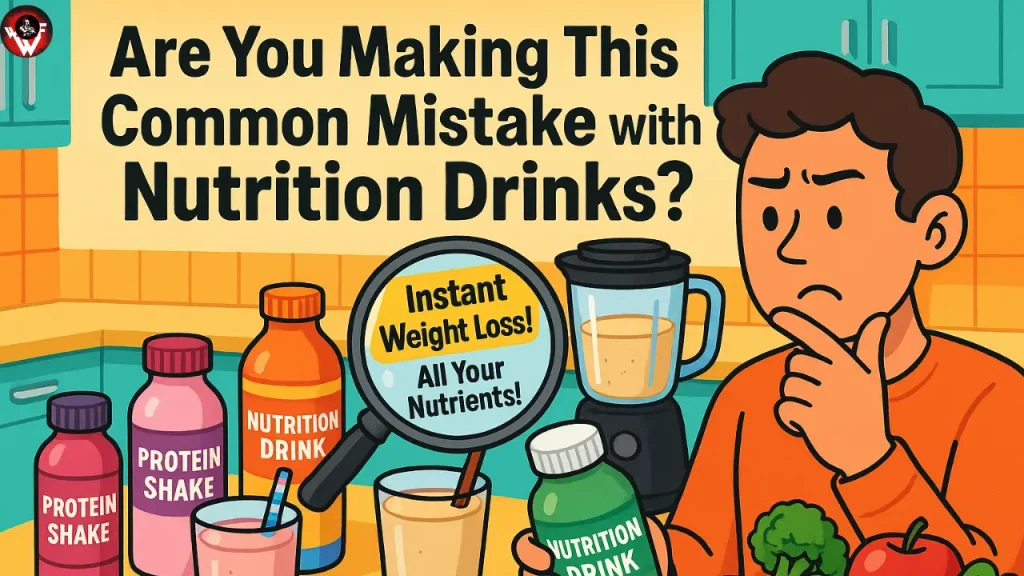
But here’s the truth: while nutrition drinks can be part of a healthy lifestyle, there’s a common mistake almost everyone makes — and it could be slowing down your progress, whether your goal is weight loss, muscle gain, or just staying energized.
So, what’s the mistake? Let’s dive in.
Related : Advanced Diet Calorie Calculator
What Are Nutrition Drinks?
Before we uncover the trap, let’s set the stage.
Nutrition drinks are ready-to-drink beverages or powders mixed with water or milk that claim to provide essential nutrients — protein, vitamins, minerals, and sometimes carbs or healthy fats. They’re designed to support health, fitness, and convenience.
They’re popular for good reasons:
- Convenience: No cooking required — just shake and go.
- Targeted nutrition: High in protein, fortified with vitamins, or designed for specific goals (like weight loss or energy).
- Marketing appeal: Words like “clean,” “lean,” or “performance” make them sound healthier than they sometimes are.
Here’s a quick comparison:
| Type | Purpose | Pros | Cons |
|---|---|---|---|
| Protein Shakes | Build/repair muscle | High protein, easy to digest | Can be processed, may lack micronutrients |
| Meal Replacement Drinks | Replace full meals | Balanced macros, fortified with vitamins | Often high in sugar or artificial ingredients |
| Vitamin Drinks | Boost hydration & micronutrients | Easy way to add vitamins | Usually low in protein, can be sugary |
The Common Mistake with Nutrition Drinks
Now to the heart of the problem.
The mistake most people make with nutrition drinks is relying on them as a substitute for real food — too often and too heavily.
Using Them as Meals Too Often
Yes, meal replacements exist. But relying on them every day, sometimes for two or more meals, means you’re missing out on the complex nutrition that only whole foods provide: fiber, phytonutrients, and healthy fats that support long-term health.
Ignoring Hidden Sugars and Calories
Many nutrition drinks marketed as “healthy” contain as much sugar as soda. For example:
- Some popular meal replacement shakes contain 18–24 grams of sugar per serving — that’s nearly 5–6 teaspoons!
If your goal is weight loss, this sneaky sugar can keep you stuck.
Thinking “Liquid = Light”
People often underestimate liquid calories. Drinking 250–400 calories doesn’t feel like much, but do that twice a day and you’ve added the equivalent of an extra meal without realizing it.
Example Scenario:
Imagine Sarah, who wants to lose weight. She replaces breakfast and lunch with nutrition drinks. By dinner, she’s starving and overeats. Instead of helping, the drinks lead to cravings and weight gain.
Practical Solutions & Fixes
The good news: nutrition drinks aren’t the enemy. You just need to use them smartly.
When to Have Them
- Post-workout: Great for quick protein and recovery.
- Busy mornings: A shake + piece of fruit beats skipping breakfast.
- On the go: Better than fast food when options are limited.
Balance Them with Whole Foods
- Pair your protein shake with an apple or handful of nuts.
- Use them as a bridge, not a replacement for every meal.
How to Read Labels (What to Watch For)
- Protein: At least 15–20g per serving.
- Sugar: Under 10g per serving (ideally less).
- Calories: 150–300 depending on whether it’s a snack or meal.
- Fiber: At least 3g if it’s a meal replacement.
Checklist: How to Choose a Good Nutrition Drink
✔️ Has more protein than sugar
✔️ Contains fiber or healthy fats
✔️ Doesn’t exceed 300 calories unless used for meal replacement
✔️ Contains real ingredients (whey, pea protein, oats, etc.)
✔️ No long list of artificial additives
Related: How Many Calories in a Teaspoon of Granulated Sugar?
Expert Tips & Alternatives
1. Make Your Own Smoothie
Homemade = control over ingredients. Quick recipe:
- 1 scoop whey or plant protein
- 1 cup unsweetened almond milk
- 1 handful spinach
- ½ banana
- 1 tbsp peanut butter
- Ice cubes
2. Combine with Fiber-Rich Snacks
Pair your shake with carrot sticks, a slice of whole-grain toast, or chia pudding.
3. Practice Portion Control
Don’t supersize — a standard serving is usually enough. More isn’t always better.
4. Rotate with Whole Food Options
Instead of 2 shakes a day, make one meal real food (like Greek yogurt + berries + nuts).
When people search “best nutrition drinks for weight loss,” they’re looking for low-calorie, high-protein options that keep them full.
If you want “high protein nutrition drinks,” aim for 20g+ protein per serving with minimal sugar.
And if you’re wondering, “are nutrition drinks good for you?” — the answer is yes, when used strategically and not as a crutch.
FAQ Section
Are nutrition drinks healthy every day?
Yes, if you use them to supplement whole food, not replace it entirely. One a day is fine for most people.
Can I replace 2 meals a day with nutrition drinks?
Not recommended long term. It can help short-term weight loss but isn’t sustainable for health or digestion.
Which nutrition drink is best for weight loss?
Look for high protein, low sugar (under 10g), and around 200 calories per serving.
Do nutrition drinks have side effects?
Too many can cause digestive issues, excess sugar intake, and nutrient gaps if you skip real food.
Conclusion: The Smart Way Forward
Nutrition drinks are powerful tools — but only when used smartly. Don’t fall into the trap of thinking they can fully replace whole food. Instead, use them as support for your lifestyle, workouts, and busy days.
Remember: real health is built on balance, not shortcuts.
About The Author