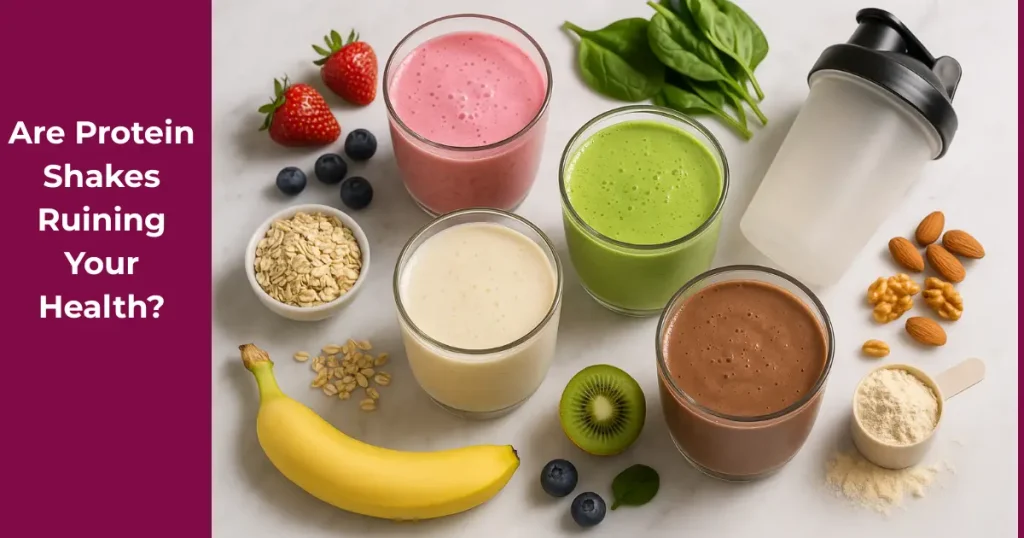
Protein shakes have become synonymous with fitness. Walk into any gym, and you’ll find people chugging them before or after workouts, believing they’re essential for muscle gain, fat loss, and overall health. But here’s the big question: Are protein shakes actually good for you—or could they be silently ruining your health?
In this article we’ll dive deep into the downsides of protein shakes, covering:
- Their nutritional composition
- Health risks you should know about
- When and why they may be unnecessary or even harmful
- Who should avoid them
- Safer alternatives for protein intake
💪 What Are Protein Shakes?
Protein shakes are liquid supplements typically made with whey, casein, or plant-based protein powder, mixed with water, milk, or other ingredients. They’re popular for:
- Supporting muscle repair
- Enhancing workout recovery
- Offering a quick meal replacement
Common Ingredients:
- Protein (15–30g per serving)
- Artificial sweeteners (sucralose, aspartame)
- Flavors, gums, thickeners
- Additives (vitamins, digestive enzymes, stabilizers)
But while they’re convenient, that convenience comes with potential health concerns if consumed excessively or without proper awareness.
⚠️ Are Protein Shakes Ruining Your Health?
The answer: It depends on how often and why you’re using them.
Let’s explore the potential downsides:
1. 🚫 Digestive Issues
Many people experience:
- Bloating
- Gas
- Stomach cramps
- Diarrhea or constipation
Causes:
- Lactose intolerance (in whey concentrate)
- Artificial sweeteners
- Overconsumption of protein in one sitting
- Low-quality protein sources
👨⚕️ Expert Tip: People with IBS, SIBO, or sensitive digestion should avoid processed protein shakes and choose real food proteins or isolate powders without fillers.
2. 🚨 Excess Protein Can Harm Your Kidneys
If you have pre-existing kidney conditions, too much protein can:
- Increase glomerular pressure
- Lead to impaired kidney function
- Cause dehydration and electrolyte imbalance
Healthy individuals can generally handle high protein intakes, but chronically overusing protein powders without proper hydration or diet balance may strain kidney health.
3. ⚖️ Weight Gain, Not Fat Loss
Ironically, protein shakes marketed for weight loss can cause:
- Caloric surplus if consumed with meals
- Mindless snacking due to liquid hunger
- Over-reliance, reducing whole food intake
🧃 A shake with milk, banana, peanut butter, and protein can hit 400–600 kcal easily—not ideal for someone aiming for fat loss.
4. ⚗️ Hidden Toxins in Low-Quality Brands
A report by the Clean Label Project found that many popular protein powders contain:
- Heavy metals (lead, arsenic, cadmium)
- BPA from plastic packaging
- Pesticide residues
These contaminants are linked to:
- Hormonal disruptions
- Cancer risks
- Reproductive harm
- Immune dysfunction
✅ Solution:
- Choose third-party tested, clean-label proteins
- Prefer grass-fed, organic, or plant-based options without fillers
5. ⚠️ Hormonal Imbalance & Skin Issues
Some users report:
- Acne outbreaks (especially from whey protein)
- Estrogen dominance from soy protein
- Insulin spikes from added sugars or carbs
The IGF-1 (Insulin-like Growth Factor-1) in whey may trigger acne and disrupt hormonal pathways in some people—particularly teenagers and women with PCOS.
6. 🧠 Not a Substitute for Real Food
Protein shakes are not nutritionally complete.
They often lack:
- Fiber
- Essential fatty acids
- Phytonutrients
- Slow-digesting carbs
Relying on shakes instead of real meals can lead to nutrient deficiencies, gut microbiome issues, and disordered eating patterns.
7. 💵 Cost vs. Benefit
Some protein powders can cost ₹3,000–₹6,000 ($40–$80) per kg. If you’re not an athlete or advanced lifter:
- Eggs, paneer, lentils, tofu, chicken may offer better value per gram of protein
- Many users get minimal extra benefit from supplements if their diet already meets protein needs
✅ When Are Protein Shakes Helpful?
Despite the downsides, protein shakes do have a place—when used correctly.
Good Uses:
- Post-workout when you can’t eat right away
- For vegans or vegetarians who struggle with total protein intake
- In elderly populations with low appetite
- For busy professionals who miss meals but want to stay on track
⚖️ It’s not about demonizing shakes—but knowing when, how, and how much to use them.
🧪 Recommended Daily Protein Intake
According to the International Society of Sports Nutrition (ISSN):
| Population | Protein (g/kg body weight) |
|---|---|
| Sedentary adults | 0.8–1.0 g/kg |
| Active individuals | 1.2–2.0 g/kg |
| Bodybuilders/athletes | 1.6–2.2 g/kg |
📌 Use protein shakes only to bridge gaps—not as the foundation of your diet.
🚫 Who Should Avoid Protein Shakes?
- People with kidney disease
- Teens with hormonal acne
- Women with PCOS or estrogen imbalance
- Anyone allergic to dairy or soy
- People already consuming a high-protein diet from food
🥗 Safe & Healthy Alternatives to Protein Shakes
| Food | Protein (per 100g) | Bonus |
|---|---|---|
| Eggs | 13g | Complete protein, rich in choline |
| Greek Yogurt | 10g (per 100g) | Gut-friendly, low fat |
| Cottage Cheese (Paneer) | 18g | Vegetarian, calcium-rich |
| Lentils | 9g | High fiber, plant-based |
| Tofu/Tempeh | 10–15g | Soy protein with fiber |
| Chicken Breast | 31g | Lean, low-carb |
| Fish (Salmon/Tuna) | 22–25g | Omega-3 rich |
💡 Tip: Combine plant proteins like lentils + rice to get a complete amino acid profile.
💬 Common Myths About Protein Shakes
❌ Myth 1: You need shakes to build muscle
Fact: Whole foods work just as well, often better for long-term gains.
❌ Myth 2: More protein = more muscle
Fact: Your body uses only what it needs; the rest is stored as fat or excreted.
❌ Myth 3: Protein shakes help everyone lose weight
Fact: They can help if they replace unhealthy snacks—but can backfire if added on top of an already sufficient diet.
🧠 Final Verdict: Are Protein Shakes Ruining Your Health?
⚖️ They can, if:
- Overused without dietary balance
- Sourced from poor-quality brands
- Consumed as a meal replacement daily
- Paired with a sedentary lifestyle
✅ They can help, if:
- Used as a supplement, not a staple
- Sourced from clean, tested brands
- Paired with a whole-food diet and exercise
📌 Key Takeaways
- Protein shakes are not essential for most people
- Overconsumption may lead to digestive issues, acne, kidney strain, and toxin exposure
- Prioritize whole food proteins for a balanced, sustainable diet
- Use shakes strategically—after workouts or during busy days
- Always choose third-party tested, clean-label products
About The Author