Introduction
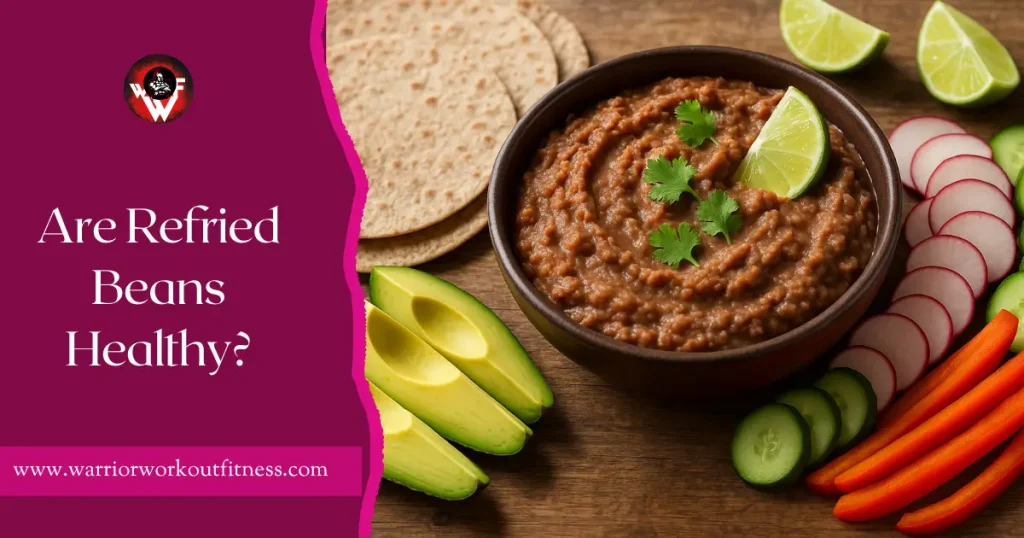
Let’s bust a common myth: it’s easy to think that “refried” implies something fried and unhealthy—as if these beans are calorie bombs. But here’s a surprising, relatable fact: many traditional versions of refried beans are made with healthy beans, spices, and little oil—and can be a nutritious part of your plate. In fact, asking are refried beans healthy opens up a world of protein, fiber, and plant-based goodness right within the first 100 words—as promised. So let’s explore the refried beans nutrition facts, the protein in refried beans, and whether they truly fit into healthy Mexican food options.
Nutritional Breakdown: What’s in Refried Beans?
According to USDA data, here’s a breakdown per ½ cup (about 120 g) of traditional refried beans (pinto bean base, cooked with fat and seasonings):
| Nutrient | Amount per ½ cup | Notes |
|---|---|---|
| Calories | ~110–130 kcal | Depend on added fat |
| Total Fat | ~4–6 g | Often from lard or oil |
| — Saturated Fat | ~1–2 g | Lower if using plant oil |
| Carbohydrates | ~20 g | Includes ~6–8 g fiber |
| — Dietary Fiber | ~6–8 g | Great for digestion |
| Protein | ~6–7 g | Plant-based source |
| Sodium | ~300–400 mg | Varies widely in canned options |
| Iron | ~1.5 mg | ~8% Daily Value |
| Folate | ~60 µg | ~15% DV |
Sources include USDA FoodData Central, Mayo Clinic dietary reference data, and corroborating insights from Harvard Health on legumes being a good source of fiber, protein, and minerals.
6–8 Science-Backed Health Benefits of Refried Beans
1. Rich in Plant-Based Protein
Refried beans deliver roughly 6–7 g of protein per half-cup, making them a helpful staple for vegetarians, vegans, and anyone looking to reduce meat while meeting protein needs.
2. High in Fiber for Digestive Health
With 6–8 g of dietary fiber, they support gut health, aid in regularity, and contribute to satiety—helping curb overeating.
3. Low Glycemic Impact
Though they contain carbs, the fiber slows sugar absorption—helping maintain steadier blood sugar levels (supported by Harvard Health insights on legumes).
4. Heart-Healthy Nutrients
Beans contain potassium, iron, magnesium, and folate—all linked to cardiovascular health. Plus, replacing saturated-fat-rich meat with beans may reduce heart disease risk.
5. Supports Weight Management
High fiber and protein promote fullness, and when prepared smartly (low added fat), refried beans can be lower in calories compared to fried or creamy sides.
6. Excellent Micronutrient Source
Folate and iron play key roles in energy metabolism and blood health. Particularly valuable for women of reproductive age, vegans, and vegetarians.
7. Affordable and Accessible Nutrition
Beans are inexpensive, shelf-stable (especially dry/powdered), and nutrient-dense—great for budget-conscious healthy eating.
8. Versatile Kitchen Staple
They can be incorporated into tacos, burritos, wraps, bowls, or even blended into healthy dips—encouraging more vegetable-rich meals in creative ways.
Potential Risks and Drawbacks
1. High Sodium Content ( Especially in Canned)
Many canned refried beans clock in at 600–800 mg sodium per serving—over 25–30% of daily recommended sodium—unless labeled “low-sodium.” Watch for the low-sodium refried beans options or rinse canned beans to reduce sodium by ~30%.
2. Unhealthy Fats in Traditional Recipes
Traditional recipes may use lard or high-fat oils, raising saturated-fat and calorie content. Plant-based oils or no-oil methods reduce these drawbacks.
3. Portion Control
Eating a “large scoop” could push calories, sodium, and fat higher. Sticking to standard ½-cup portions helps manage intake.
4. Possible Added Fillers or Thickeners
Some store-bought versions have added preservatives, fillers, or flavor enhancers—so always check labels.
Healthier Preparation Methods & Practical Tips
- Use low-sodium canned beans or better yet, cook from dried beans—you control the salt.
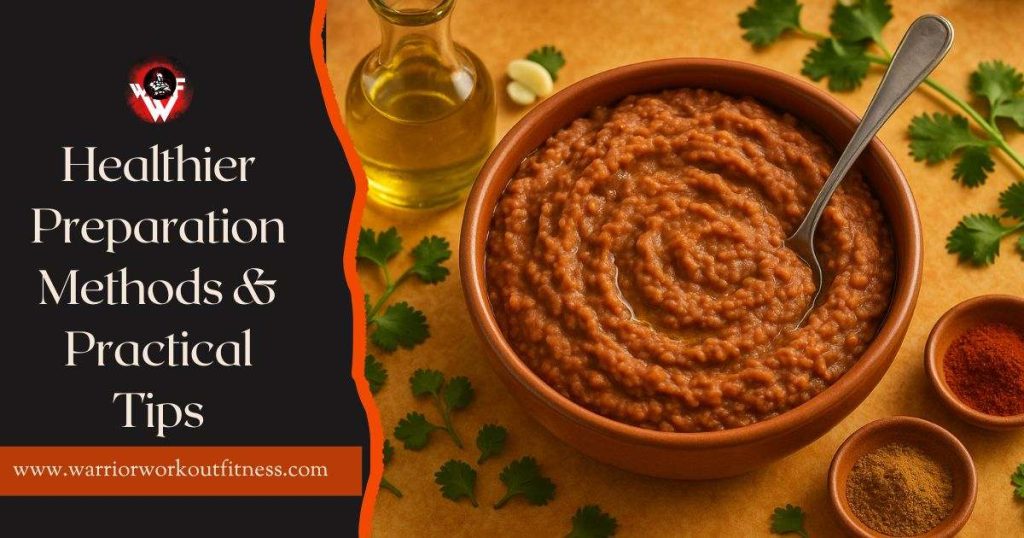
- Skip the lard: use olive oil or avocado oil, or go oil-free—use cooking spray or broth to sauté aromatics.
- Add flavor naturally: garlic, onion, cumin, chili powder, smoked paprika, lime juice, chopped cilantro or poblano peppers.
- Blend for creaminess: mash well or use a stick blender for a smoother texture without heavy fats.
- Fortify nutrition: stir in spinach, kale, or puree cauliflower for extra fiber, vitamins, and volume.
- Portion wisely: measure a ½-cup serving (about 4 Tbsp) to keep calories/moderation in check.
Comparison Table: Refried Beans vs. Black Beans vs. Pinto Beans
Here’s a handy side-by-side of nutrition per ½ cup cooked (about 120 g) plain beans (no added fat or salt):
| Bean Type | Calories | Fiber | Protein | Fat | Sodium | Notable Nutrients |
|---|---|---|---|---|---|---|
| Refried Beans* | 110–130 | 6–8 g | 6–7 g | 4–6 g | 300–400 mg | Depends on prep; added fat/salt possible |
| Black Beans | ~110 | ~7 g | ~7 g | ~0.5 g | ~1 mg | Rich in anthocyanins, iron, magnesium |
| Pinto Beans | ~120 | ~7 g | ~7 g | ~0.5 g | ~1 mg | High in folate, potassium, thiamin |
*Refried beans values vary—if made from scratch with dried pinto beans and minimal oil/salt, they approach the plain pinto-bean profile. Canned versions may jump in sodium and fat.
Dietary Suitability
- Vegetarian: Excellent—beans are a core protein source.
- Vegan: Yes—just choose or prepare versions without lard; stick to plant oils or oil-free recipes.
- Gluten-Free: Yes—beans are naturally gluten-free. Just watch for cross-contamination or gluten-based thickeners in commercial products.
- Weight-Loss Diets: Great when prepared thoughtfully—fiber and protein support fullness, and lower-fat, low-sodium versions can align well with calorie goals. Portion control is key.
FAQs
- Are canned refried beans healthy?
They can be—but many store versions are high in sodium and incorporate added fats. Opt for low-sodium refried beans, rinse them, or better yet, make homemade to control ingredients. - Do refried beans help with weight loss?
Yes—when eaten in moderate portions and prepared with minimal added fats and salt. Their protein and fiber support satiety, curb cravings, and may help you eat fewer calories overall. - What are refried beans nutrition facts?
Per ½ cup: about 110–130 kcal, 6–8 g fiber, 6–7 g protein, 4–6 g fat, and 300–400 mg sodium (varies by recipe/source). - Is there a low-sodium refried beans option?
Yes—many brands offer low-sodium or “no-salt-added” versions. Homemade versions are easiest to tailor. - Can I make refried beans healthy?
Absolutely—use dried beans, limit or use healthy oils, pack in spices, bulk with veggies, and moderate portion size. - Are refried beans gluten-free?
Yes—beans are inherently gluten-free. Just ensure no gluten-based thickeners are used in commercial varieties if you have celiac or gluten sensitivity.
Conclusion
So, are refried beans healthy? The answer: yes—with some caveats. When made with minimal added fat, lower sodium, and eaten in proper portions, they’re a fiber-rich, protein-packed, budget-friendly staple that fits vegetarian, vegan, gluten-free, and weight-loss diets. They’re a genuine contender in healthy Mexican food options, offering satisfying flavors with solid nutrition. At WarriorWorkoutFitness, we believe that smart preparation keeps them a nutritious, versatile—and yes, healthy—addition to your plate.
Follow Us On : Instagram | Facebook |
About The Author